


(Note: the journey took place on August 11th 2015)
When you have limited time to travel, every hour is so precious. The day after we explored Machu Picchu, we continued to explore Cuzco and its surrounding.
Why Cuzco? It’s the next big city going south, the closest one to Machu Picchu, and after exploring MP and still suffering Jetlag, it feels right to stay calm and enjoying the City and its surrounding. My friend Christine picked half day Tour Maras and Moray, continued by exploring the city central and have some rests.

Where we stay on Cuzco
We chose Hospedaje Turistico Recoleta for its best review on the hostelworld. It’s 6 minutes by car to Cusco’s Plaza de Armas or 15 minutes’ walk. The hotel interior is pretty much traditional, it has lots of inca statues in lots of places, some of them are nice but some of them are scary especially during the night. The reception was very very helpful and friendly, they also helped us carry our big luggage upstair. The breakfast area was very beautiful and the breakfast itself delicious.
Moray
Judging by the rhythmic name, Maras and Moray must be some twin city or adjacent places or twin architectural building. Well, the second one was true though; it’s an adjacent historic place. The tour agent that we used was Alpaca expeditions and the package tour of Maras and Moray Half day tour suits us best.
Our tour guide Justino and the driver picked us up around 8 am using a small van and from our Hostel we departed to Moray first. It took about 1,5 hours to reach Moray. Moray is located 50 km northwest of Cusco. From Cusco to Moray we were entertained by lush yellow grass spread across the horizons. The hill, highlands, the perfect blue sky and the clouds made the trip looks unreal. That was the third time I got mesmerized by Peru landscapes. There are lots of activities you can do to explore the hills. There are numerous ATV, bikes and private car along the way. Riding an ATV or biking seems a good alternative if you like outdoor activities.
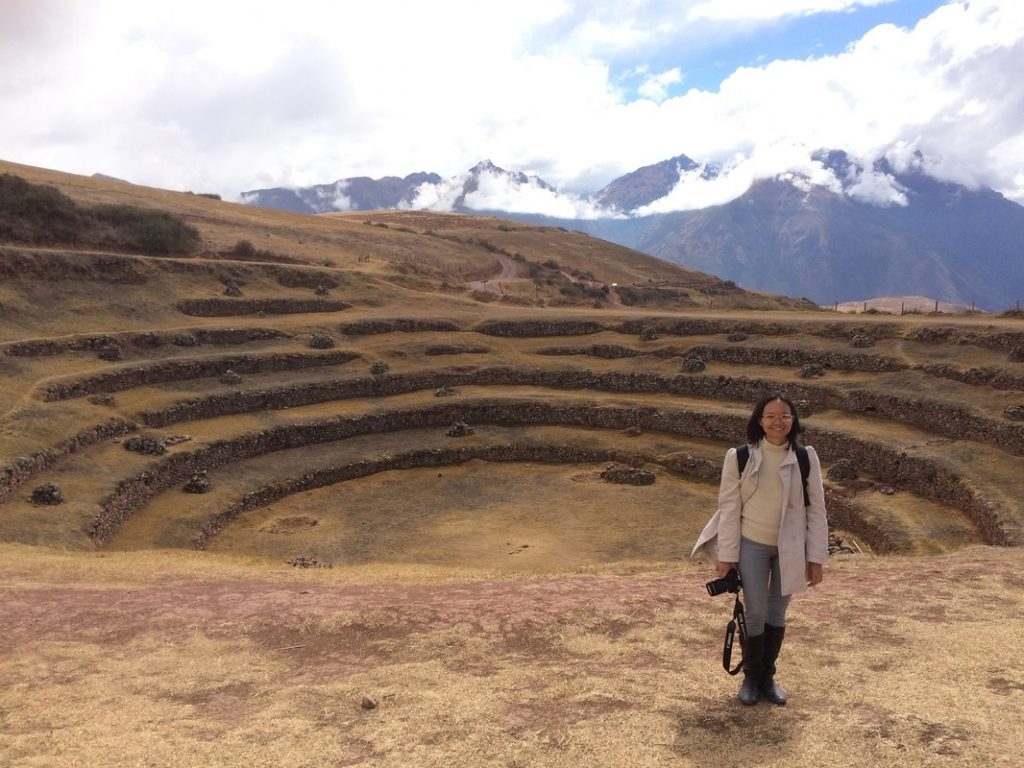
Moray is an archaeological site by ancient inca. It’s a circling terraces with diameter up to 80 meter and the depths of the biggest terrace reaches 50 meters. There are 3 circle around the complex. Moray was thought as a “laboratory” for the ancient Inca to try out plant’s reaction to different kinds of altitude. They once brought plants outside the Peru and wanted to see how they react when planted in different kinds of altitude. It is not known for sure what kind of plant they tested but it was said to be medicinal plants. With the dry season turns everything yellow, the combination between yellow terraces and the clear blue sky made such a picture perfect.
|
|
||||||||||||
|


After Moray we headed to Maras. Maras is located 40 km from cusco. It is also known as Salinas de Maras. At the first glimpse, I was reminded of Pamukkale in Turkey. Both Maras and Pamukkale are terraces landscape, dominated by white colour and inundated by water. The difference though, Pamukkale is a terraces made of calcium carbonate (travertine) and it’s a result of a natural process, each terraces are wider.On the other Hand, Maras is a man-made terraces used as salt evaporation ponds. The technique to make salt originated back in pre-Inca times and is preserved until this modern time. The water comes from salty water in the area. After flowing through different terraces and with the help of the sun, the salt will precipitate in the walls. That’s when the owner start scraping or harvesting the salt. The salt harvested from the terraces also sold in the area and is known as “pink salt”. Justino said that once the area were intended to be bought for a tourist area but the local communities rejected the offers. Till now, the local families live in the area and make livelihoods from harvesting the salt and from the tourist attraction.When we went there, the rain poured. So we just stood under indoor and listening to Justino’s story and unable to explore every terraces, one thing I regret.

After Maras, Justino took us to visit local village where they live from making knitting wear from Alpaca wools. We were then introduced of how they make alpaca wools and coloring them. First, the alpaca wools are cuts from the animal. Then using detergent, the wools are washed and smoothed into a woven material.The second step is coloring. They use natural died material to color the wools such as lime, corn, and many other plants. The color material is then cooked together with the wools until the wools perfectly dyed.Using traditional wooden made equipment, they spin the wools into wearable. With the influence of Peruvian culture, each product has a very unique pattern and it’s so Peruvian.
By the end of the demonstration, we were shown some of the products. Some of them were from alpaca and some of them from baby alpaca. Those that were made from baby alpaca were really expensive. But it was worth it looking at how hard to make it and the quality of the product itself. You can bargain if you see something that you like. Again, if you buying more, you can get more discount for each piece. Some of these product have higher quality over those sold in Aguas Calientes.
|
|
||||||||||
|


