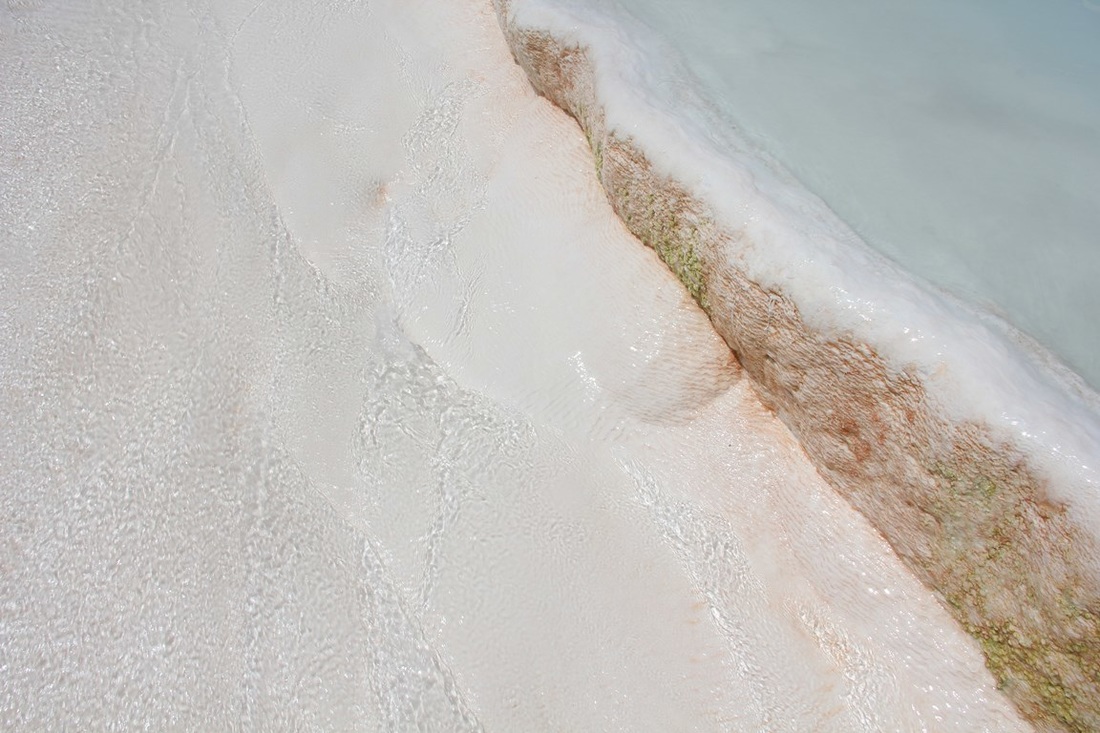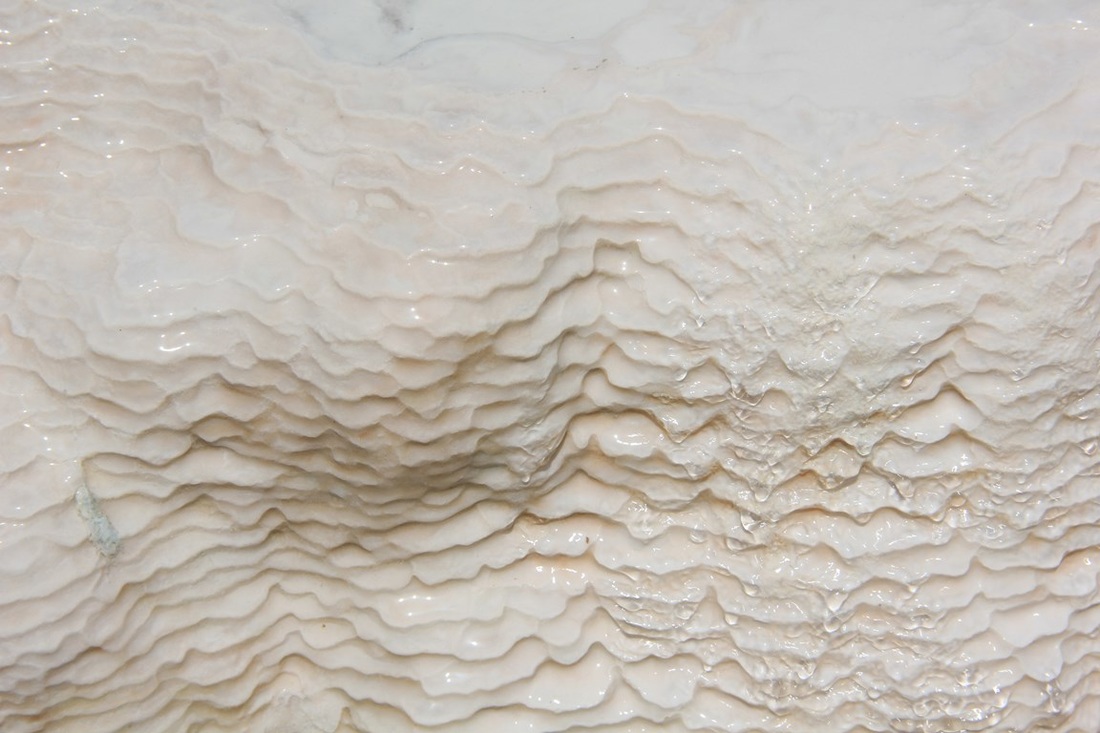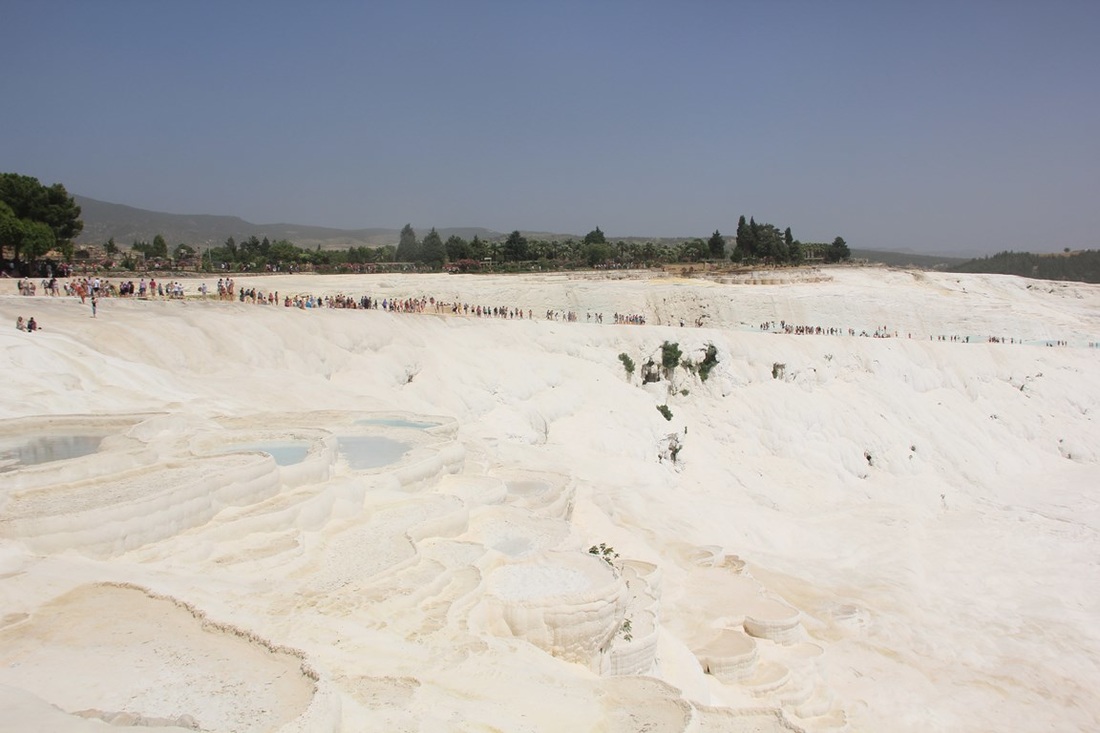

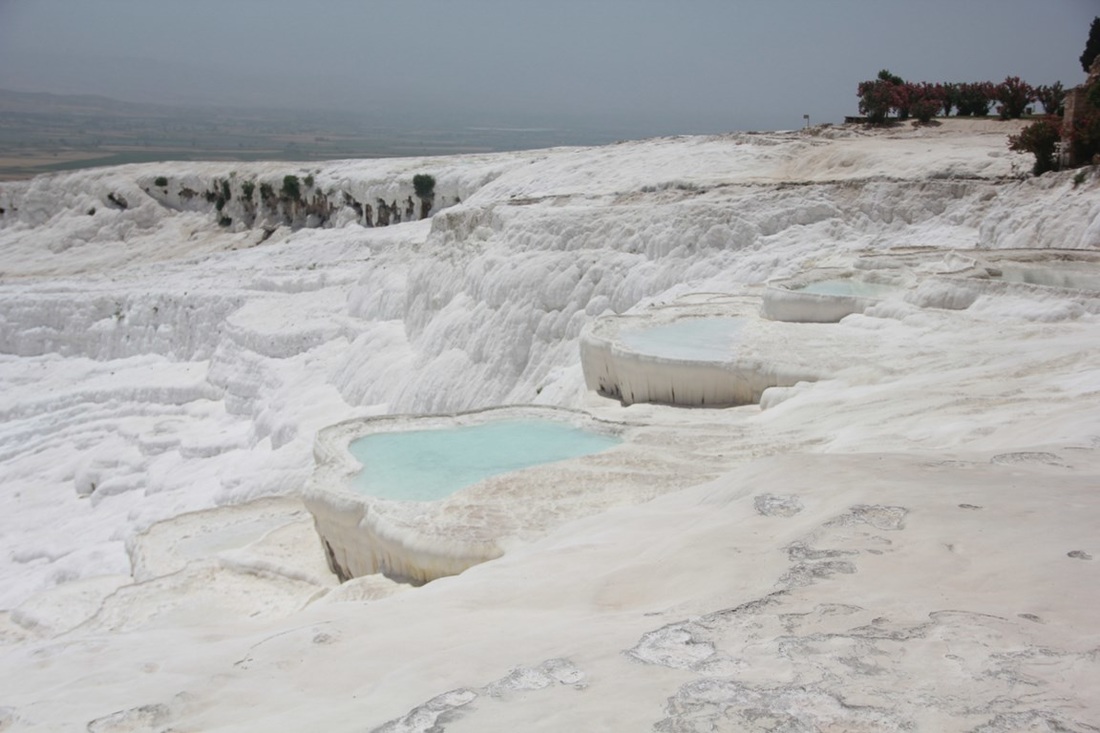
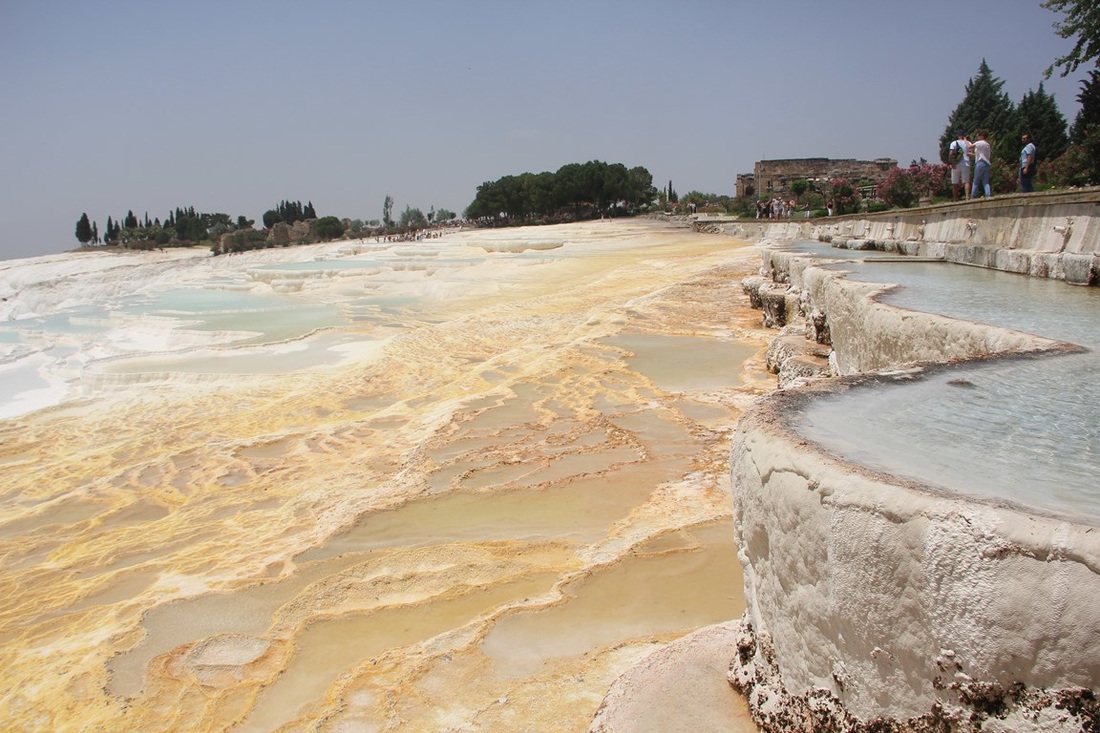
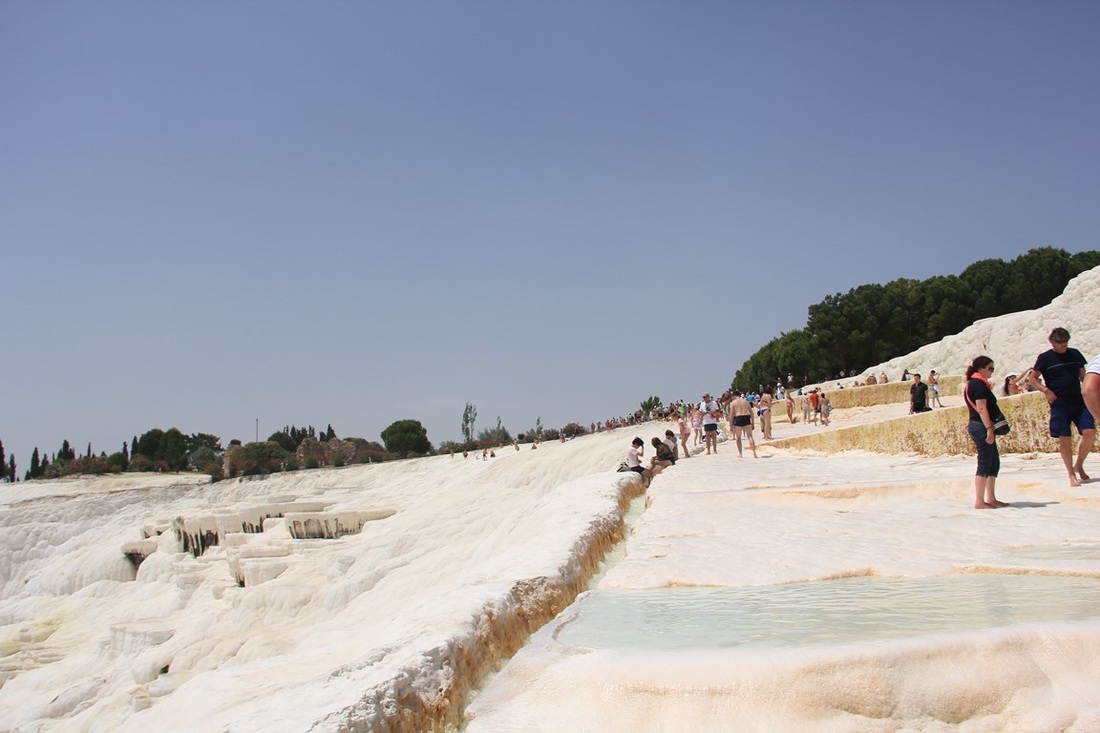
If there are places that became my trigger to go to Turkey, they would be Pamukkale and Cappadoccia. I had never seen anything like Pamukkale and i was just hypnotized by how surreal it was in the picture. The white terraces that filled by a clear blue water reflecting the light of the sun. It was just unique and simply amazing.
After having Prine, Miletus and Didyma (PMD) tour, we arrived back at Selcuk. So, we took tour that can pick us up in Selcuk for Pamukkale Tour. The drive from Selcuk to Pamukkale is about 3,5 to 5 hours. The plan was to depart from Selcuk for a half day Tour Pamukkale & Hierapolis in the afternoon, and then arrive in the Denizli bus station so we could continue our journey to Fethiye.
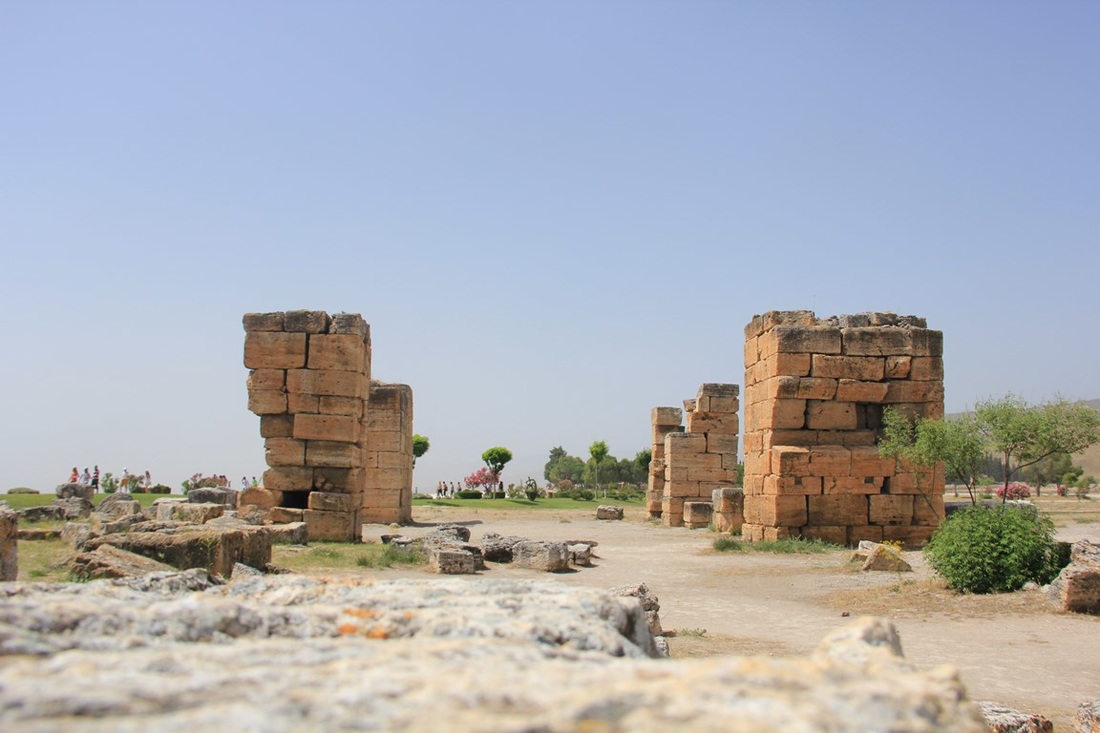
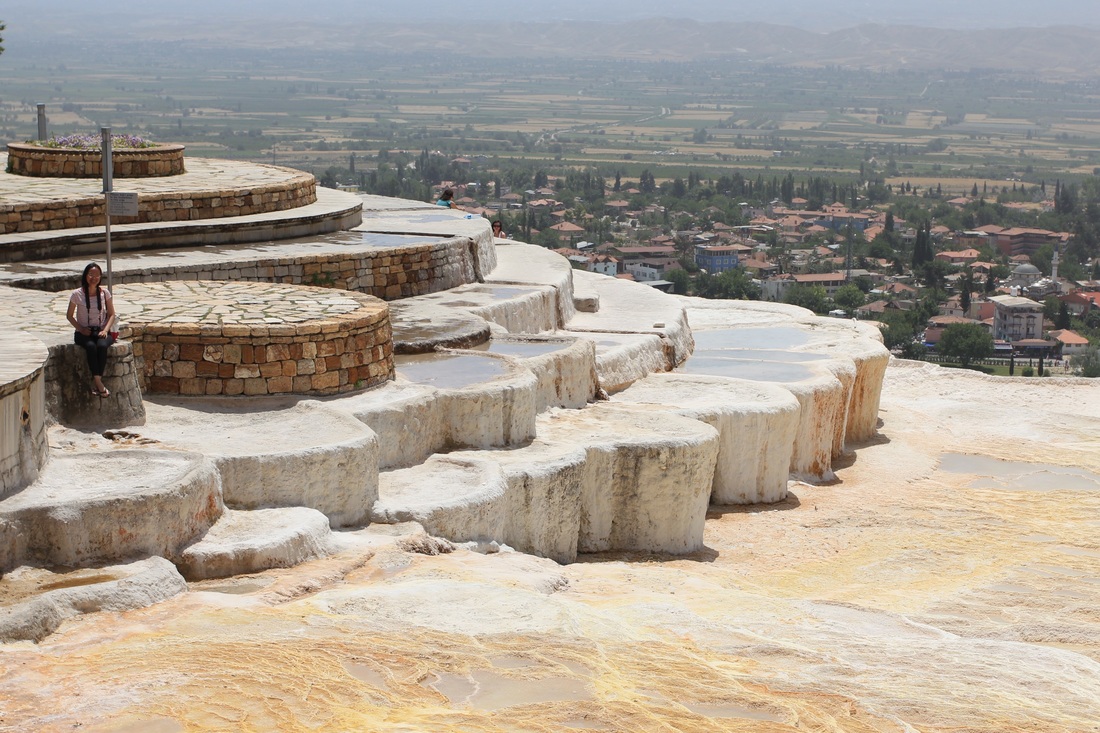
Pamukkale in Turkish means Cotton Castle (rightfully so). Pamukkale is located in Denizli Province in Turkey, or 18 km north of the Denizli. The area covers many hot springs and travertines. Ancient Rome built the Hierapolis city on top of this area and in the complex we can find Pamukkale and the Hierapolis city ruins. Both of them are UNESCO Heritage site.
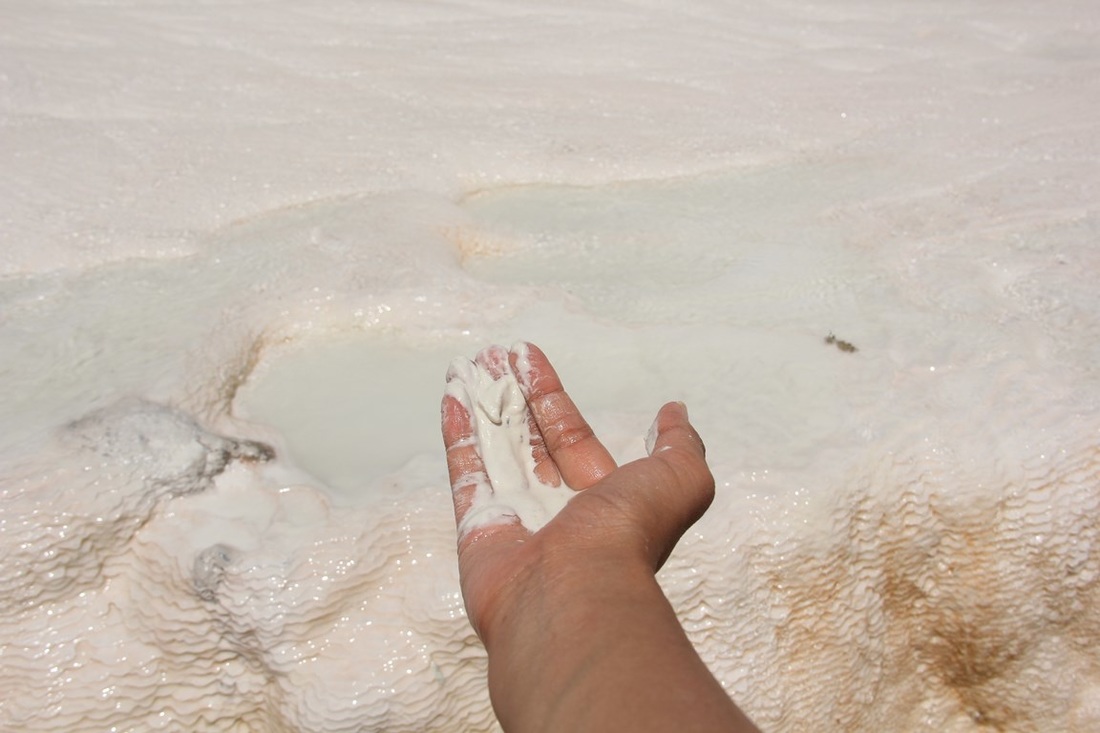
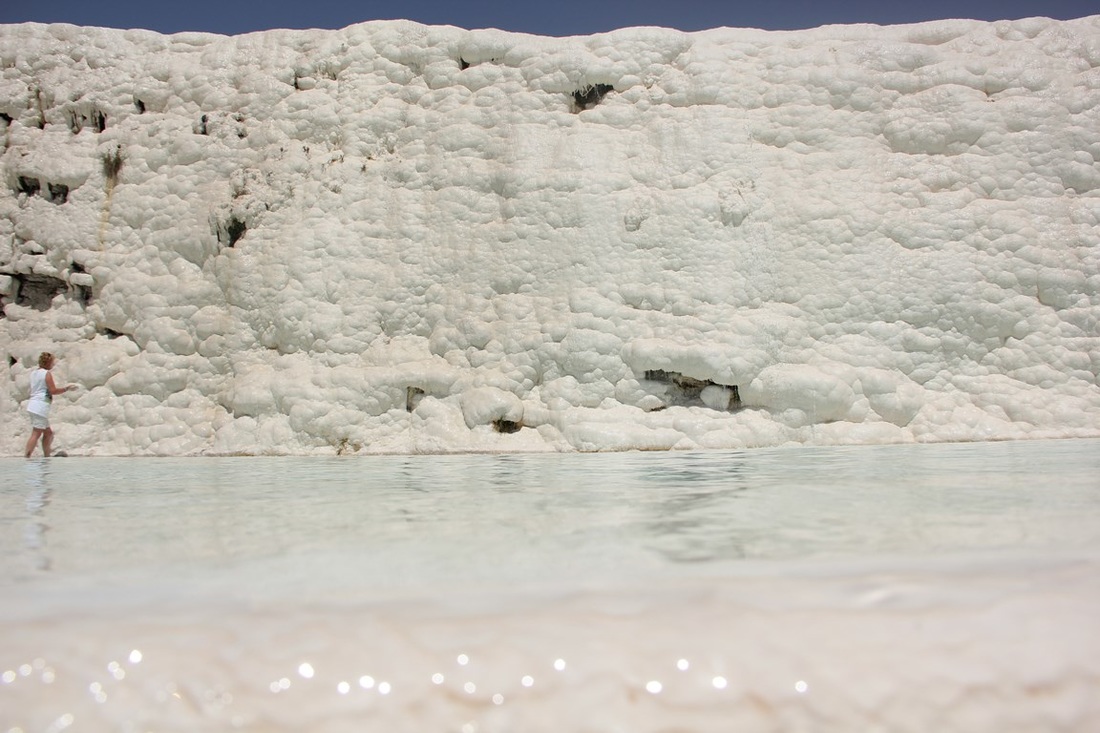
How can it be so white and what happened to the terraces? that were the first questions that popped up in my mind immediately. Well, here’s the short version of the history. Along time ago, there was this shifting of a fault, along with this shift came out the hot spring with high mineral content. There are about 17 hot springs in the area that emerges and flowing to the lands and deposit calcium carbonate. When the water with this mineral touch the surface, the carbon-dioxide is released and Calcium Carbonat is deposited, which over the time will be harden and turn to travertines. Until now, the flowing of the water is controlled and only to certain area.
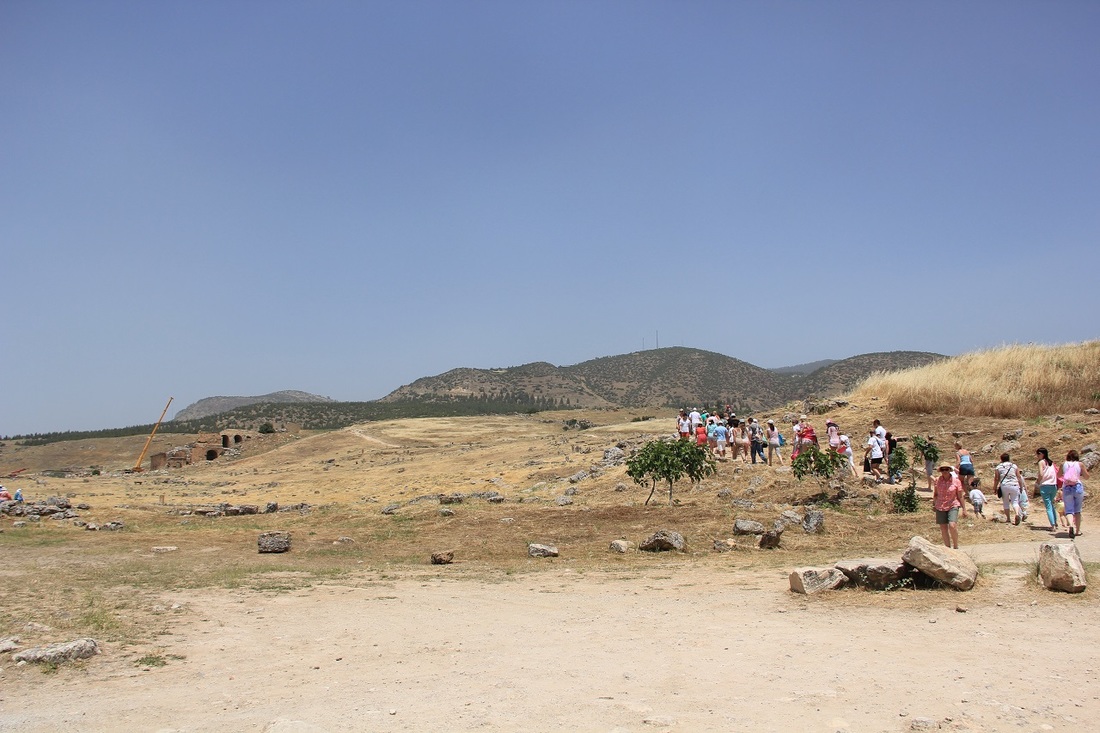
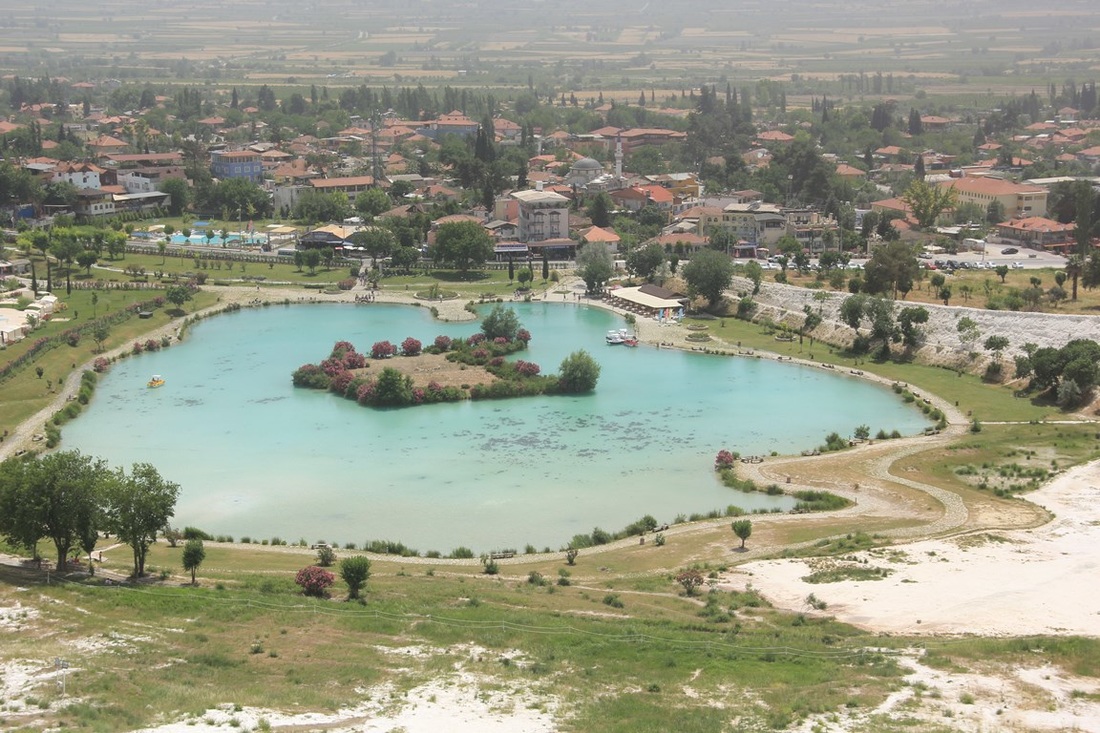
When i entered the area, not all terraces were opened to the tourist. Only on the top row terraces are open and all tourist should open their shoes/sandals/ flip-flops. During the 1960 there were a lot of hotels built in the area and they drained the water to fill their swimming pool. The hotels were then demolished to better preserving the area. These are some pictures of Pamukkale.




|
|
|